
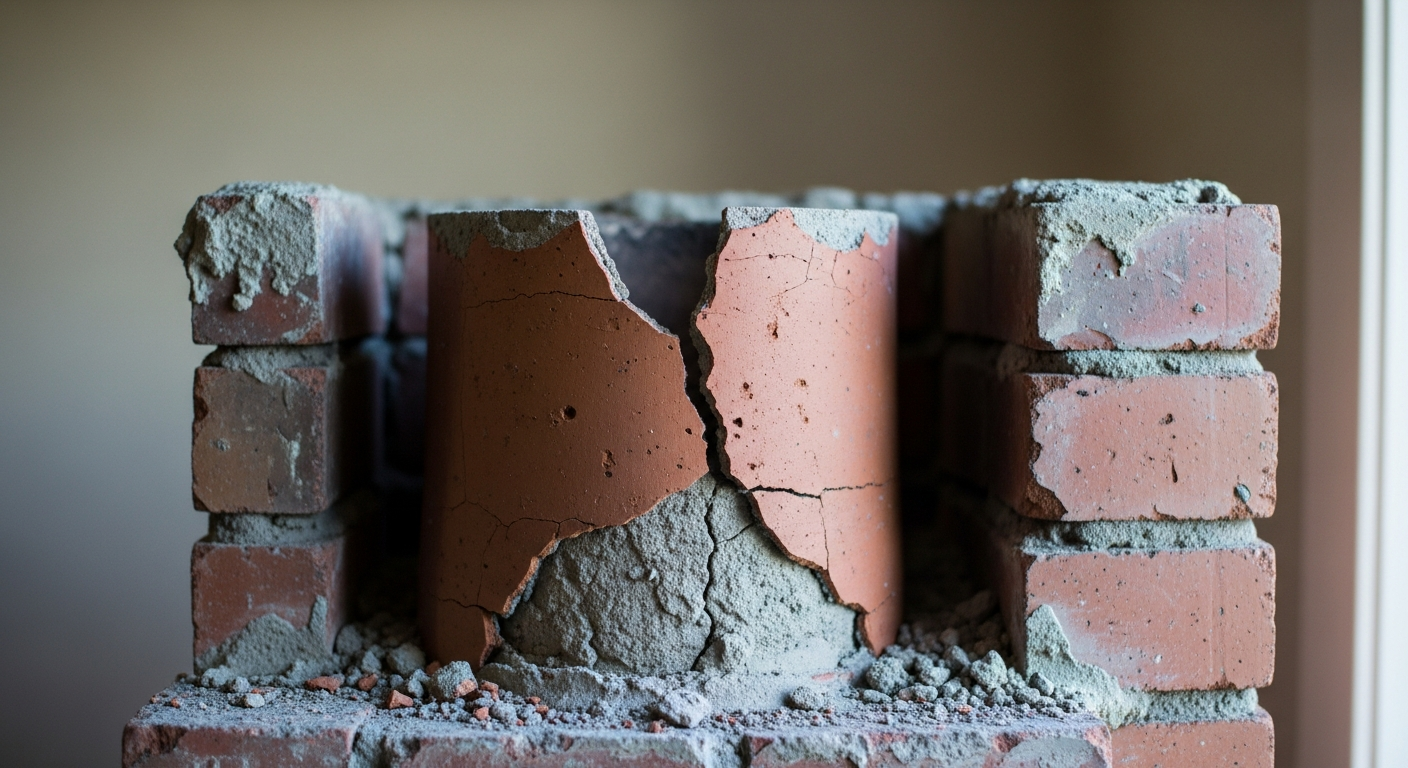
Older Seattle homes—particularly those built before 1950—often have non-standard flue dimensions, crumbling terra-cotta liners, and century-old mortar that genuinely alter how quickly creosote accumulates and how safely a sweep can clean the flue. Rather than accepting a one-size-fits-all annual schedule, owners of older homes should understand the specific structural factors that drive real cleaning needs, so they can evaluate any recommendation on its merits.
Why Seattle's Older Housing Stock Is Different
Seattle grew rapidly between the 1890s and the 1940s, and thousands of Craftsman bungalows, Tudor cottages, and four-square homes from that era are still heated with—or at least fitted with—their original masonry chimneys. These structures were built to different codes, by different hands, with materials that have now been aging for 80 to 130 years.
Three structural characteristics set them apart from a newer home's chimney:
Non-standard flue sizes. Pre-war builders commonly used flue tiles sized to old empirical rules rather than today's standardized dimensions. An undersized flue relative to the firebox opening creates a draft imbalance that causes smoke—and unburned carbon—to linger longer on the liner walls. That means creosote can accumulate faster per cord of wood burned than it would in a properly sized modern system. Conversely, an oversized flue on a small insert can mean slower draft and incomplete combustion for the same reason.
Deteriorated terra-cotta liners. The clay flue tiles used through most of the twentieth century are durable, but not indefinitely. After 80-plus years of thermal cycling in Seattle's wet climate—where moisture intrudes every winter and then expands and contracts with each fire—spalling, cracking, and offset joints are common. These surface irregularities trap creosote in pockets that a standard rotary brush may not fully clear, and they also mean a sweep needs to inspect, not just clean, every visit. Pushing a standard cleaning schedule without acknowledging liner condition is a red flag. See our related guide on Signs Your Chimney Needs Relining: A Seattle Homeowner's Guide for the visual cues that suggest cleaning alone is no longer adequate.
Century-old mortar joints. The lime-based mortars used before the 1950s are softer and more vapor-permeable than modern Portland-cement mixes. In Seattle's rainfall—roughly 38 inches annually across the metro area—soft mortar erodes steadily. Loose mortar debris falls into the flue and mixes with creosote deposits, changing their consistency and sometimes making them harder to brush out cleanly.
A Hypothetical That Illustrates the Problem
Imagine Edward, a homeowner in Ballard, who bought a 1924 Craftsman two years ago. He uses the fireplace two or three evenings a week from November through February—a moderate but not heavy burn schedule. A door-to-door technician tells him he needs a sweep every six months because his chimney is "old." Edward agrees and books two cleanings a year at $250 each.
This scenario is hypothetical, but it illustrates a real dynamic: age alone is not a frequency driver. What actually matters is the rate of creosote accumulation, which depends on how often the fireplace is used, what wood is burned (seasoned hardwood versus wet fir), how well the flue drafts given its dimensions, and—critically—the condition of the liner surface. A sweep who spends five minutes with a flashlight and gives Edward a blanket twice-yearly recommendation without addressing any of those factors is selling a schedule, not a service. That said, older liners do warrant more thorough inspection at each visit, which is a legitimate cost driver.
Realistic Cleaning Frequency by Home Era and Use
The table below reflects typical Seattle conditions—a wet climate, predominantly softwood availability, and aging housing stock. These are realistic ranges, not guarantees.
| Home era | Typical liner condition | Moderate use (2–3x/week, Nov–Feb) | Light use (≤once/week) | Recommended inspection depth |
|---|---|---|---|---|
| Post-2000, standard insert | New stainless liner | Once per year | Every 2 years | Level 1 visual |
| 1960s–1990s | Aging terra-cotta, minor cracks | Once per year | Once per year | Level 1–2 |
| 1930s–1950s | Spalling terra-cotta, soft mortar | Once per year + Level 2 inspection | Once per year | Level 2 with camera |
| Pre-1930 | Possibly unlined or severely degraded | Once per year minimum; relining likely needed | Once per year | Level 2–3 depending on findings |
A Level 2 inspection—which includes a camera scan of the flue interior—typically costs $150–$350 in the Seattle area on top of the sweep itself. For a pre-1940 home, that cost is usually justified because the liner condition, not just the creosote level, determines whether the fireplace is safe to use at all. You can read more about how masonry deteriorates over time in our guide to Chimney Repair Old House Seattle: What 100-Year-Old Masonry Needs.
What a Legitimate Frequency Recommendation Looks Like
A credible technician working on an older Seattle home will ask how often you burn, what wood species you use, and when the flue was last inspected with a camera. They will look at creosote level on the day of the visit—industry guidance from the Chimney Safety Institute of America (CSIA) uses a measurable deposit threshold, not a calendar—and they will document liner condition so you have a baseline for next year.
If a technician quotes a cleaning schedule without examining your actual flue condition or asking about burn habits, that is the pattern described in our guide Chimney Repair Red Flags: How to Avoid Getting Ripped Off in Seattle. An older home does not automatically mean more frequent cleaning; it means more thorough evaluation at each visit.
How to Use This When Comparing Companies
When you request quotes, ask each company to explain specifically why they are recommending a given frequency. Push for answers tied to your liner material, your flue dimensions, and your actual burn habits. Companies ranked through the ranking are evaluated in part on how transparently they communicate service rationale—price transparency and technician quality are two of the eight public measures used. A company that can answer your structural questions clearly is one worth considering; one that defaults to "annual is standard" without examining your 1920s terra-cotta liner is one worth questioning.
Frequently asked questions
- Does an older Seattle home always need more frequent chimney cleaning than a newer one?
- Not necessarily more frequent, but more thorough. Older homes with degraded terra-cotta liners and non-standard flue dimensions need a Level 2 camera inspection at each cleaning visit to assess liner condition—not just a brush sweep. The actual cleaning interval still depends on how often the fireplace is used and how much creosote has accumulated, not on the home's age alone.
- How much does a chimney sweep plus inspection typically cost in Seattle for an older home?
- A standard sweep in the Seattle area typically runs $150–$300. Adding a Level 2 camera inspection, which is advisable for pre-1950 homes, usually adds $150–$350 to that cost. Prices vary by company and access difficulty; always get a written itemized quote before work begins.
- What is the biggest structural reason older Seattle homes accumulate creosote differently?
- The combination of non-standard flue sizing and spalling terra-cotta liner surfaces. An undersized or oversized flue relative to the firebox creates draft imbalances that slow combustion gases, allowing more creosote to condense on the walls. Rough, cracked liner surfaces then trap that creosote in pockets a standard brush may not fully clear.