
Some Seattle homeowners who call two separate chimney companies for competing estimates are unknowingly reaching the same dispatcher, the same crew, and the same pricing sheet — just under different business names. Spotting the pattern before you book protects you from paying for a second opinion that is really just a first opinion in disguise.
Why This Pattern Exists in the Seattle Market
Running multiple branded names off one operational backbone is not illegal on its own — many legitimate companies do business under a DBA ("doing business as") name. The consumer-protection problem arises when two nominally separate companies are positioned as independent competitors, so a homeowner believes they are pressure-testing one quote against another. In a region where a chimney reline can run anywhere from $1,500 to $4,500 depending on liner type, flue length, and access difficulty, that "second opinion" can feel like meaningful due diligence — until you realize both quotes came from the same source.
The behavior has been observed across several Puget Sound markets: shared scheduling software that books both brands into the same calendar, invoice PDFs with identical fonts, field layouts, and line-item language, and phone representatives who answer with slightly different scripts but whose voices — and hold music — are recognizable to callers who tried both numbers on the same afternoon.
An Illustrative Scenario
*The following is a hypothetical teaching example, not a real customer account.*
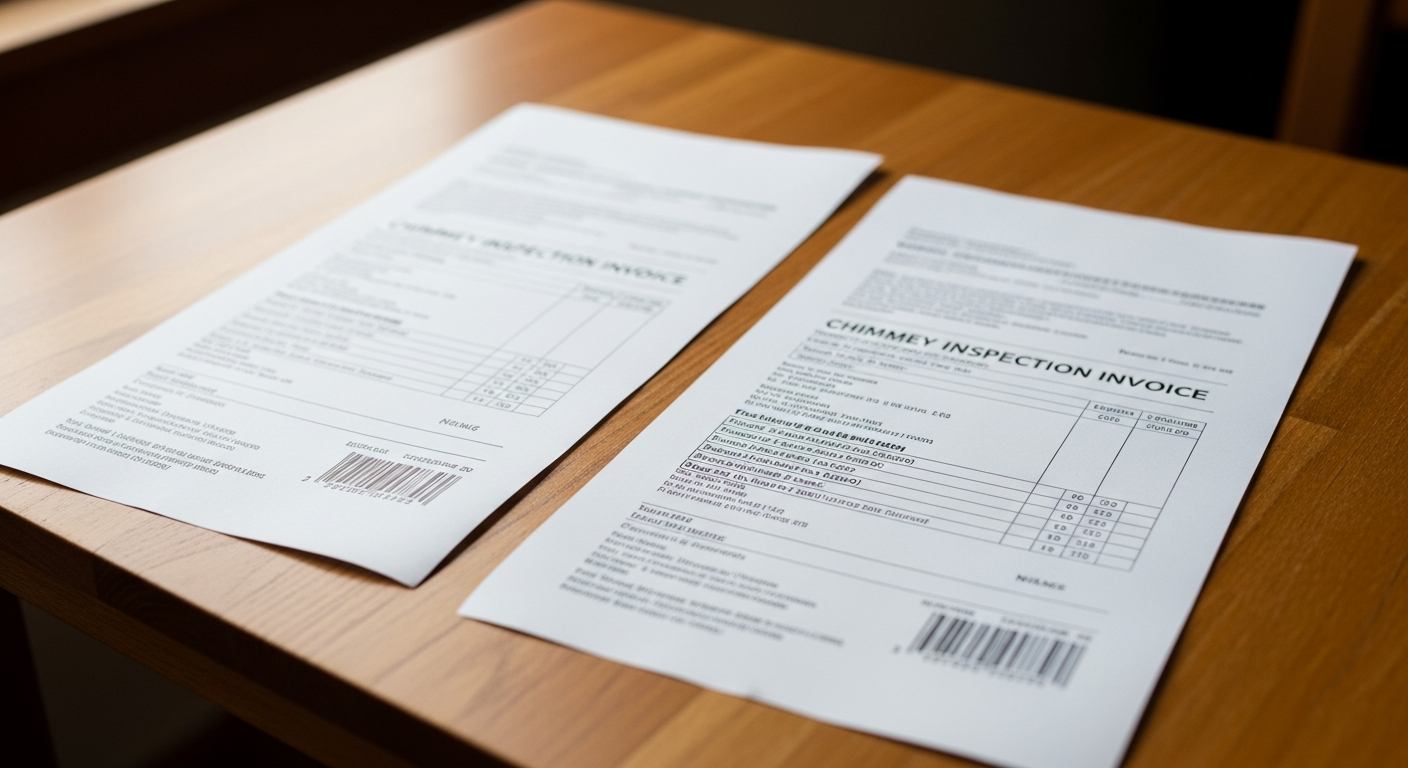
Edward, a Ballard homeowner, gets a knock at the door from a technician who says his chimney cap is damaged and his liner is failing. The repair quote is $2,800. Skeptical, Edward searches online for a second opinion and finds a company with a different name and a different website. He calls, books an appointment, and two days later a technician arrives — in an unmarked van, wearing a plain gray shirt — and quotes $2,750 for nearly identical work. Reassured that two companies landed in the same ballpark, Edward signs the contract. Only later, when comparing the two invoices side by side, does he notice that both PDFs use the same custom footer graphic, the same job-number format, and list the same UBI number under "Licensed & Bonded." Edward had called the same operation twice.
How to Cross-Check Before You Book
1. Look Up the Washington L&I Contractor Registration
Every chimney contractor working in Washington State must hold a valid contractor registration with the Department of Labor & Industries. That registration is tied to a Unified Business Identifier (UBI) number. Before scheduling a second estimate, search both company names at the Washington L&I Contractor Lookup. If two different business names resolve to the same UBI or the same registered agent address, they share a legal backbone — and your "independent" comparison may be worthless.
2. Compare Invoice Templates Side by Side
After any inspection, ask for a written itemized quote. Place both PDFs in a folder and compare:
- Font family and size
- Logo placement and color values
- Line-item labels ("Labor," "Material," "Liner Install" vs. specific part numbers)
- Footer language, including license number and bond carrier name
- Job-number formats (e.g., both using "SEA-XXXXXX")
Identical or near-identical templates are a strong signal of shared back-office infrastructure.
3. Listen to the Phone Experience
Call both numbers at different times of day and pay attention to hold music, greeting scripts, and whether the representative uses the same phrasing when describing the booking process. Note the callback number that appears on your caller ID — if it is the same or routes through the same exchange, that is worth investigating further.
4. Search the Physical Address
Look up each company's registered business address on the Washington Secretary of State's Corporations & Charities search. Two businesses at the same suite number in a commercial mailbox facility, with no separate street presence, is not automatically suspicious — but combined with matching invoices and UBI numbers, it completes the picture.
Red-Flag vs. Green-Flag Signals at a Glance
| Signal | Red Flag | Green Flag |
|---|---|---|
| L&I UBI number | Same UBI across both names | Distinct UBI, different registration dates |
| Invoice template | Identical fonts, footers, job-number format | Different layouts, different logo styles |
| Phone experience | Same hold music, same greeting script | Different staff, different booking software |
| Business address | Same suite, same mailbox | Separate physical locations or service yards |
| Google Business listing | Fewer than 12 months old, few local photos | Established listing, geo-tagged local images |
| Technician van | Unmarked or magnetic signage | Permanently branded vehicle |
Typical Seattle chimney inspection fees run $100–$200 for a Level I inspection and $200–$400 for a Level II with camera. If a company waives the inspection fee entirely when paired with a repair quote, that pricing structure can make it easier to absorb the cost of running two brands simultaneously — worth keeping in mind.
Where the Ranking Fits In
The ranking on this site evaluates companies on eight public measures — including license and insurance verification and public complaints — precisely because these markers are harder to fabricate across multiple brand identities than a website or a Google listing. If a business name does not appear in the ranking under its own distinct credentials, that absence is worth noting before you sign.
For a broader look at how search placement can mislead buyers before they even reach the phone stage, see Top of Google Isn't the Best Chimney Company — It's Who Paid. And if a technician has already told you that you need a reline, read Signs Your Chimney Needs Relining: A Seattle Homeowner's Guide before agreeing to anything — knowing what a legitimate diagnosis looks like makes it much harder for any operator, single or multi-branded, to rush you toward an expensive repair you may not need.
Frequently asked questions
- How can I tell if two Seattle chimney companies are actually the same business?
- Search both company names on the Washington L&I Contractor Lookup. If they share the same UBI number or registered agent address, they are legally the same entity. Matching invoice templates and identical phone scripts are additional confirming signals.
- Is it illegal for a chimney company to operate under two different names in Washington State?
- Operating under a DBA (doing business as) name is legal and common. The consumer-protection issue arises when two brands are presented as independent competitors to manufacture the appearance of a genuine second opinion. Failing to disclose common ownership to a customer seeking an independent estimate may constitute a deceptive practice under Washington's Consumer Protection Act (RCW 19.86).
- What should I do if I suspect I got two quotes from the same company?
- Compare the UBI numbers on both written quotes, check the Washington Secretary of State's business registry for shared addresses, and file a complaint with the Washington Attorney General's Consumer Protection Division if you believe the shared ownership was deliberately concealed to influence your purchasing decision.