
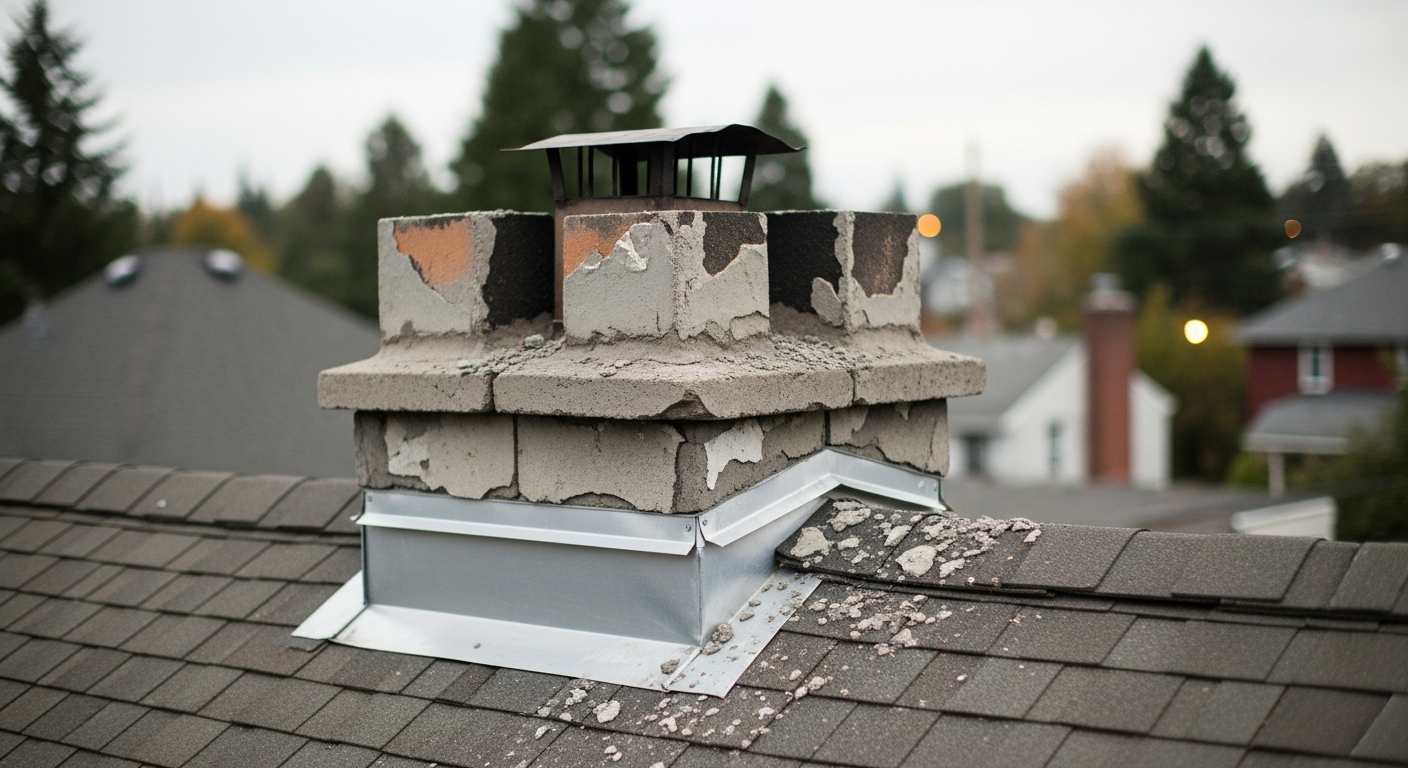
If a chimney crew begins removing components or breaking mortar before you have a written scope and price, Washington State law is on your side. The state's Home Improvement Contractor Act requires a written contract before work begins on residential projects over $1,000, and you have a three-business-day right to cancel many in-home contracts. Acting quickly — within hours, not days — gives you the most options.
How the Pressure Trap Works
Fall is the busiest window for chimney work in the Seattle area. Homeowners start fires again, call for an inspection, and a technician arrives on the roof while you stand in the living room with no clear view of what is happening. By the time the crew comes back down, they may have already chipped out a section of crown mortar, pulled a damper assembly, or removed flashing.
That act of beginning — even a small one — is deliberate. Once materials are displaced, many homeowners feel they cannot send the crew away without finishing the job at whatever price is now being quoted. Psychologists call this the sunk-cost effect; contractors who exploit it count on it.
The work-first, contract-never pattern often escalates in stages: a $99 inspection becomes a verbal estimate for a $400 crown repair, which becomes an invoice for $1,800 of "necessary" work already completed before you said yes to any of it. If you want to understand which upsell tactics are most common in this market, the companion piece Chimney Sweep Upsell Scam Seattle: How to Beat It walks through the specific language crews use.
An Illustrative Scenario
Margaret, a homeowner in Beacon Hill, scheduled an annual sweep before the rainy season. The technician went to the roof alone while she stayed inside. Fifteen minutes later he returned with photos on a phone showing broken mortar joints and told her he had "already started clearing the loose material" and that stopping now would leave her chimney worse than before. A written price was never discussed beforehand. This is a hypothetical teaching example — but it describes the mechanism accurately.
Your Washington State Rights, Specifically
| Situation | Applicable Protection | Time Limit to Act |
|---|---|---|
| Contract signed in your home | WA three-day right of rescission (RCW 63.14 / FTC Cooling-Off Rule) | 3 business days from signing |
| Work started, no written contract, job over $1,000 | WA Home Improvement Contractor Act — contractor may be in violation | Dispute at any stage; document immediately |
| Unlicensed contractor (verify at L&I) | WA RCW 18.27 — contractor cannot legally lien your home | Before or after work |
| Verbal price only, invoice higher | WA Consumer Protection Act (RCW 19.86) — unfair or deceptive acts | File with WA AG's office |
Typical legitimate chimney repair costs in the Seattle area run $200–$500 for a crown repoint, $300–$700 for damper replacement, and $1,500–$4,500 for a full liner. These are typical ranges based on regional contractor pricing — not guarantees. If a crew presents an invoice significantly above those bands for work you never authorized, that gap is worth disputing in writing.
What to Do in the First Hour
Stop the work calmly. Tell the crew you need a written, itemized scope before anything else is touched. This is a reasonable request and a legal norm.
Document the current state. Take photos or a short video of every surface the crew has accessed — roof, firebox, flue opening — before they leave the property.
Do not pay anything yet. Payment can signal acceptance of the work. Keep your card in your pocket until you have a written invoice that matches what you verbally agreed to.
Check their license. Washington State contractors must be registered with Labor & Industries. An unregistered contractor cannot file a valid lien against your home, which changes your leverage significantly.
Send a written objection. A short email or text — timestamped — stating that you did not authorize the work creates a paper trail. If the dispute goes to small claims court or the AG's office, that record matters.
For broader vetting before you ever book, the ranking scores Seattle-area chimney companies on eight public measures including license status, complaint history, and price transparency — the three factors most relevant to the scenario above.
If you are unsure whether the repairs being quoted are legitimate in the first place, Signs Your Chimney Needs Relining: A Seattle Homeowner's Guide gives you an independent baseline so you are not relying solely on a technician's word.
Filing a Formal Complaint
Washington State's Attorney General Consumer Protection Division accepts complaints online. The Washington State Department of Labor & Industries handles contractor registration violations. Both are free to use and both create public records that can affect a contractor's standing. The Better Business Bureau is a third option, though its weight is lighter than a state agency filing.
The most important takeaway for Seattle homeowners entering the fall and winter heating season: a reputable chimney contractor will hand you a written scope before the ladder goes up. If that does not happen, the law gives you room to push back — but the clock starts the moment work begins.
Frequently asked questions
- Can a chimney contractor in Washington State legally start work before I sign a contract?
- For residential projects over $1,000, the Washington State Home Improvement Contractor Act requires a written contract before work begins. Starting without one may put the contractor in violation of state law, and an unlicensed contractor cannot legally place a lien on your home.
- I already paid part of the invoice for work I didn't authorize. What can I do?
- Document everything in writing immediately — photos, texts, emails. File a complaint with the Washington State Attorney General's Consumer Protection Division under the WA Consumer Protection Act (RCW 19.86), which covers unfair or deceptive business practices. If the contractor is unregistered, also file with WA Labor & Industries.
- How do I check whether a Seattle chimney contractor is properly licensed?
- Use the Washington State Department of Labor & Industries contractor lookup tool (verify.lni.wa.gov) to confirm registration and insurance status before any work begins. An unregistered contractor has significantly fewer legal rights against you in a dispute.