
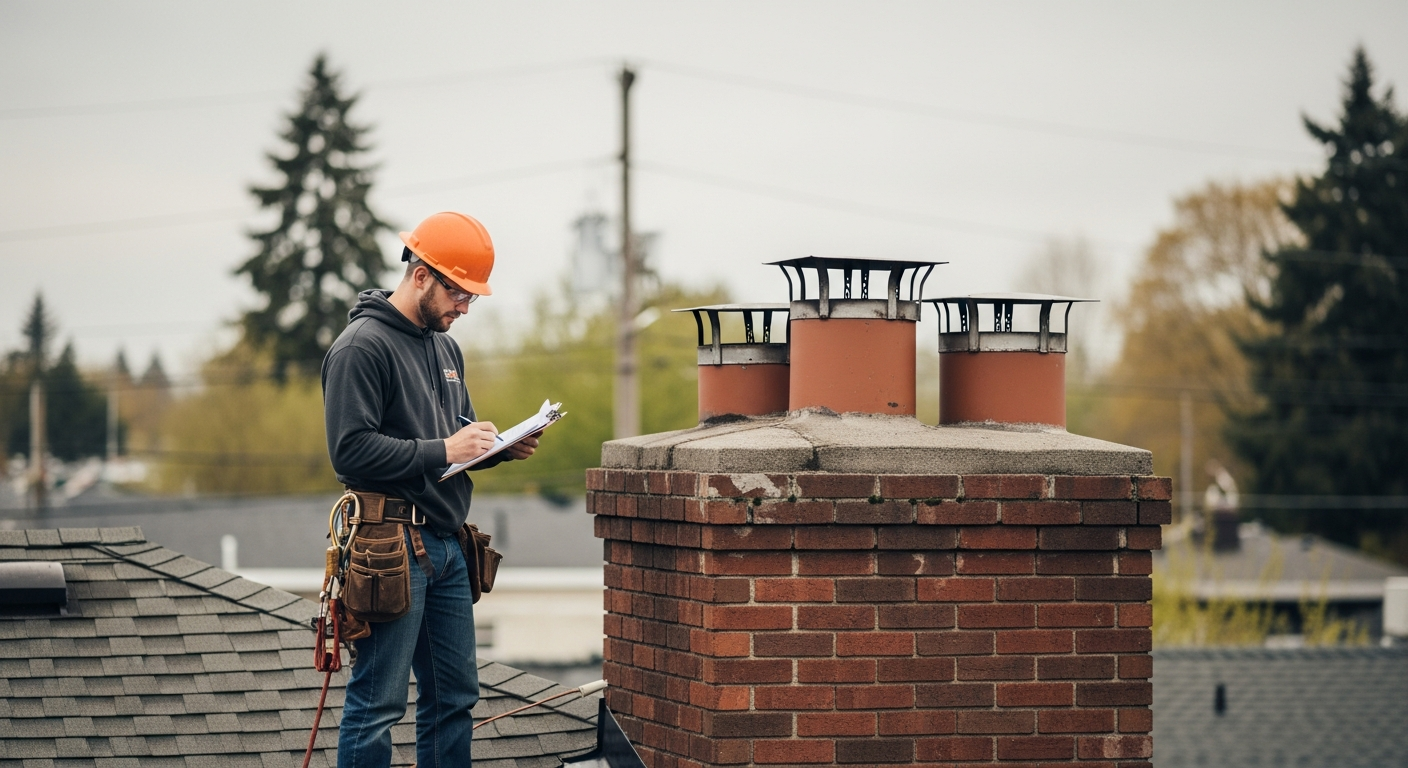
Chimney scope creep is a pattern in which a low-priced entry service — a sweep or basic inspection — is used to gain access to your home, after which repair items are added one at a time until the total bill is far beyond anything you anticipated. In the Seattle area, homeowners have reported starting at $150–$250 and ending the same afternoon with invoices exceeding $5,000 or more. You can protect yourself by requiring a complete written scope of work before any tools are picked up, and by refusing to approve same-day add-ons without a second opinion.
How the Cycle Starts: Edward's Afternoon in Ballard
Consider this hypothetical scenario, offered as a teaching example: Edward, a Ballard homeowner, sees a door-hanger advertising a $199 chimney sweep and video inspection. The technician arrives, does the sweep, then brings a tablet showing grainy footage of the flue. He points to discoloration and says the liner looks "compromised" — and that he cannot legally leave without addressing it. Edward agrees to a $600 liner patch. Once the liner work begins, the technician notes the damper is "unsafe to operate" in its current state: another $450. By 4 p.m., Edward has approved $3,200 in work, each item framed as the prerequisite for the previous item to be considered complete.
Edward's situation is hypothetical, but the mechanism it illustrates is real and has a name in behavioral economics: incremental commitment. Each small "yes" raises the psychological cost of saying no to the next item. The work already done feels like a sunk cost, and stopping mid-job feels riskier than continuing.
Why Seattle Homes Are Particularly Vulnerable
The Pacific Northwest's wet climate means genuine chimney maintenance is real and recurring. Moss, moisture intrusion, and mortar erosion are legitimate concerns in Seattle. That legitimate need creates cover for inflated repair lists, because homeowners reasonably expect some wear. Operators who exploit scope creep often lean into local climate anxiety — "with the rain you get up here, this kind of deterioration is normal" — to make each add-on feel inevitable.
If you want to understand what maintenance is genuinely typical for this region, How Often Should You Sweep Your Chimney in the Pacific Northwest? gives honest baseline expectations.
The Price Ladder: What Each Stage Typically Costs
The table below shows typical Seattle-area price ranges for common chimney services. Use it to spot when a quote is moving outside normal territory.
| Service | Typical Seattle Range | Red-Flag Signal |
|---|---|---|
| Standard sweep (wood-burning) | $150–$300 | Quoted under $99 as a door-hanger special |
| Level 2 video inspection | $200–$400 | Bundled "free" with a sweep to lower resistance |
| Damper repair or replacement | $150–$400 | Quoted same-day without written itemization |
| Flue liner repair (section patch) | $400–$900 | Approved while technician is mid-job |
| Full stainless liner reline | $2,500–$5,500 | Presented as only option without a second bid |
| Full masonry rebuild (crown, firebox) | $3,000–$10,000+ | Quoted verbally on the same visit as the sweep |
Ranges reflect typical market conditions in King and Snohomish counties and will vary by chimney height, access, and materials. They are not guarantees.
The Four Mechanics of Scope Creep
1. The low-ball entry. A sweep priced well below the market average ($99 or less) is not a bargain — it is an acquisition cost. The operator plans to recover margin through add-ons. Top of Google Isn't the Best Chimney Company — It's Who Paid explains why the most visible ads are often the most aggressive upsellers.
2. The safety hostage. Framing each new item as a safety prerequisite for the previous item prevents you from feeling you can pause and think. Legitimate safety concerns do exist, but a reputable technician will document them in writing and give you time to decide — they will not demand same-day authorization.
3. The visual panic. Tablet or phone footage from a camera scope is genuinely useful, but grainy or low-lit images of soot and normal wear can be narrated to look alarming. Ask for a copy of the footage and a written description of what was found before agreeing to anything.
4. The progressive invoice. Each charge is presented as modest relative to the total already approved. $450 feels small after you have already agreed to $2,800. This is anchoring, and it is intentional.
How to Break the Cycle Before It Starts
- Require a written scope before work begins. Ask: "Can you give me a full written estimate for everything you expect to find and everything you might recommend, before you start?" A reputable company can do this. One that cannot is relying on in-progress leverage.
- Insert a 24-hour rule. Tell every company upfront: "I do not approve add-ons the same day they are discovered. I take 24 hours to get a second opinion on anything over $300." A trustworthy operator will respect this.
- Separate the inspection from the repair. Use one company for the Level 2 video inspection, take the written report, and then solicit bids from separate companies for any recommended repairs.
- Know the signs that relining is actually needed so you are not entirely dependent on the technician's word. Signs Your Chimney Needs Relining: A Seattle Homeowner's Guide covers objective indicators.
- Check [the ranking](/#ranking). The eight-measure ranking used on this site includes public complaint history and BBB record — two data points that surface patterns of scope creep before you open your door.
Questions to Ask Before Any Technician Arrives
Call the company the day before and ask these three things out loud:
1. *"Do you charge for the inspection separately from any repairs?"* (Bundling them creates pressure.) 2. *"Will you give me a written itemized estimate before starting any work beyond the sweep?"* (A yes is mandatory. A hedge is a warning.) 3. *"What is your policy if I want a second opinion before approving a repair?"* (A legitimate company welcomes this.)
The answers will tell you more than any online review.
Frequently asked questions
- Is it normal for a chimney sweep in Seattle to recommend repairs on the same visit?
- A technician can legitimately note problems during a sweep, but recommending and pressuring you to approve significant repairs on the same visit — before you have a written estimate or time to get a second opinion — is a warning sign. Reputable companies document findings in writing and allow you time to decide.
- How do I know if a chimney liner repair quote in Seattle is reasonable or inflated?
- Typical Seattle-area flue liner section patches run $400–$900; a full stainless liner reline typically runs $2,500–$5,500 depending on height and materials. If a same-day verbal quote falls well outside these ranges, or if the technician says relining is the only option without providing a written report, get at least one independent bid before approving anything.
- Can I stop a chimney repair mid-job if I feel the scope is growing beyond what I agreed to?
- Yes. You are not legally obligated to approve work beyond what you originally authorized in writing. Ask the technician to stop, document the current state of the chimney with photos, and request an itemized invoice for work completed so far. Then get independent bids for the remaining work.