
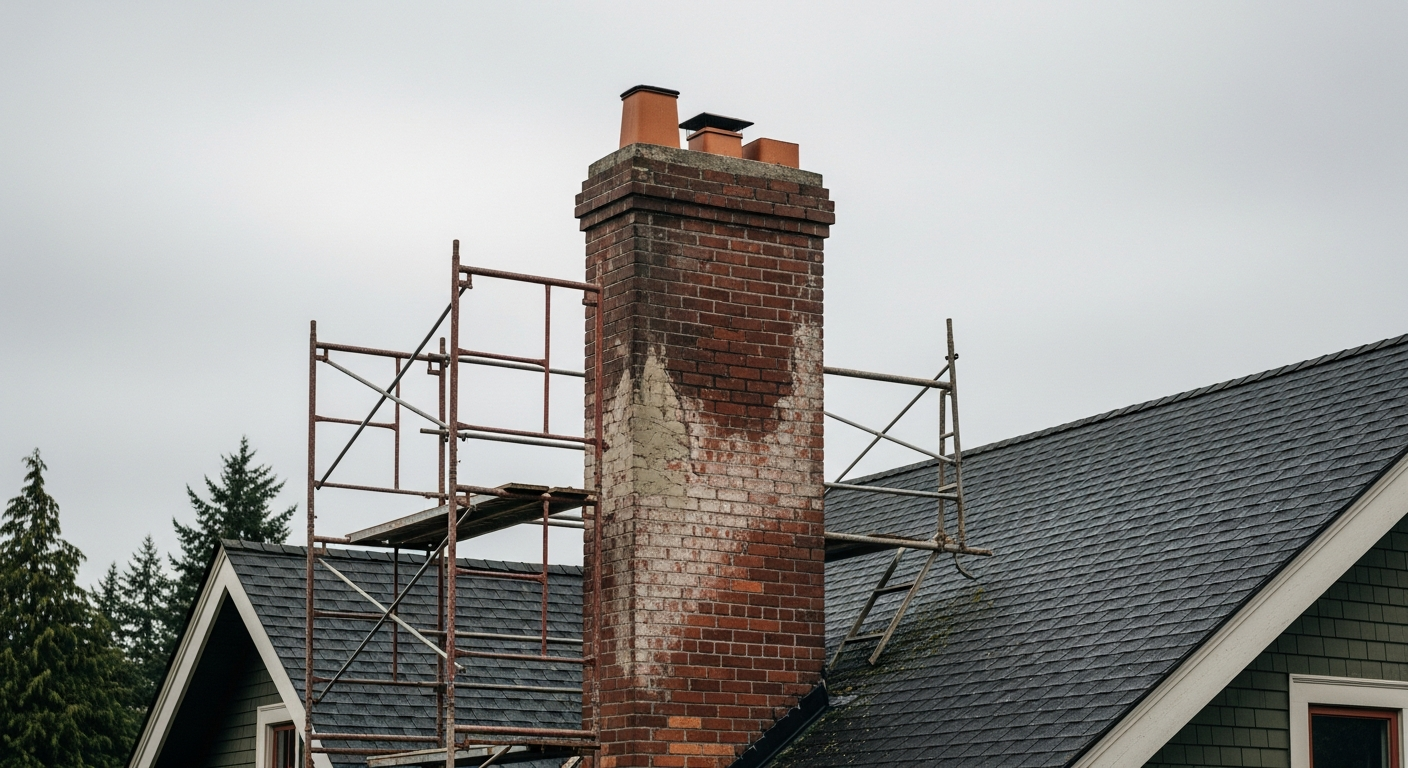
Structural chimney repairs in Seattle — including full or partial rebuilds, flue liner replacements, and significant masonry work — commonly require a building permit under the Seattle Municipal Code and Washington State Building Code (WSBC, based on the International Building Code). Cosmetic work such as a basic sweep or minor mortar touch-ups typically does not. A contractor who tells you permits are unnecessary for a major repair is either mistaken or cutting corners, and either situation leaves you holding the liability.
What Triggers a Permit in Seattle
Seattle's Department of Construction and Inspections (SDCI) requires permits when work affects a structure's integrity or fire-safety systems. For chimneys, that generally includes:
- Full chimney rebuilds above the roofline or from the firebox up
- Flue liner replacement — whether steel insert, cast-in-place, or clay tile
- Structural masonry repairs involving the removal and replacement of more than a minor section of brick or block
- Firebox reconstruction
- Chase and crown replacement tied to structural framing changes
Work that is almost always permit-exempt includes annual cleaning, video inspections, damper hardware swaps, and cosmetic repointing of a few joints. When in doubt, SDCI's online permit portal lets any homeowner search by project type at no cost.
The Numbers Side: Permit Costs vs. the Risk of Skipping
Permit fees in Seattle are calculated on project valuation. Below are typical ranges for common chimney scopes, based on SDCI's fee schedule structure and contractor-reported job values in the Puget Sound market. These are typical ranges, not guarantees.
| Scope of Work | Typical Seattle Job Cost | Estimated Permit Fee Range | Permit Required? |
|---|---|---|---|
| Annual sweep & inspection | $150–$300 | None | No |
| Minor repointing (cosmetic) | $300–$700 | None | No |
| Significant masonry repair | $1,000–$4,000 | $150–$400 | Usually yes |
| Flue liner replacement | $2,500–$7,000 | $200–$600 | Yes |
| Partial chimney rebuild | $4,000–$12,000 | $300–$900 | Yes |
| Full chimney rebuild | $8,000–$25,000 | $500–$1,500 | Yes |
Permit fees are a small fraction of job cost. A homeowner who skips permits to save that fee can face re-inspection costs, mandatory demolition and redo orders, and disclosure obligations that can kill a home sale years later.
An Illustrative Scenario
*The following is a hypothetical teaching example, not a real customer account.*
Edward, a homeowner in Beacon Hill, gets a quote in October to have his 1940s chimney liner replaced before the heating season begins. The contractor suggests skipping the permit to "keep it simple and save you money." Edward accepts. Two years later, when he lists the house, the buyer's inspector flags the unpermitted liner work. The lender requires either a retroactive permit — which may trigger a full SDCI inspection and possible remediation — or a price reduction. What looked like a $400 savings cost Edward several times that in negotiating leverage and delay. Under Washington's seller-disclosure law (RCW 64.06), he was also obligated to disclose the unpermitted work.
Who Is Responsible for Pulling the Permit
In Washington State, the contractor performing the work is typically responsible for obtaining the permit, and their license number must appear on the application. That said, the permit is issued for *your property*, and the legal and financial consequences of unpermitted work follow *you* as the owner — not the contractor who has moved on.
Before any structural chimney work begins, ask the contractor two direct questions:
1. Does this specific scope require a permit under Seattle Municipal Code? 2. Will you pull the permit before work starts, and can I see the permit number?
A contractor who hesitates, deflects, or says "we never bother with permits for this" is a documented red flag — one that appears in the ranking methodology under both license & insurance and public complaints criteria. You can cross-reference that concern with the broader warning signs covered in Chimney Repair Red Flags: How to Avoid Getting Ripped Off in Seattle.
Fall Is When This Matters Most in Seattle
The Pacific Northwest's wet season — running roughly October through March — is when Seattle homeowners most urgently schedule chimney work before daily fireplace use begins. That urgency is exactly when some contractors rush jobs and skip permit steps. SDCI permit applications can be submitted online and, for straightforward projects, often receive over-the-counter approval within days. The schedule impact is minimal when a contractor plans for it.
If you are weighing whether a liner replacement is even necessary, Signs Your Chimney Needs Relining: A Seattle Homeowner's Guide walks through the inspection findings that typically justify that scope — the same scope most likely to require a permit.
What to Do If Work Was Already Done Without a Permit
If a previous owner or contractor completed structural chimney work without a permit, you are not without options. SDCI's "after-the-fact" permit process allows homeowners to bring unpermitted work into the record. Expect a standard permit fee plus a documentation requirement — sometimes including opening walls or removal of finish material for inspection. It is uncomfortable but far less costly than a failed home-sale inspection or a fire-code dispute with your insurer.
Frequently asked questions
- Does replacing a chimney liner in Seattle require a building permit?
- Yes. Flue liner replacement — whether a steel insert, cast-in-place system, or clay tile relining — is classified as structural and fire-safety work under Seattle Municipal Code and the Washington State Building Code. A permit is required, and the contractor should pull it before work begins.
- Who is legally responsible if a chimney contractor skips the permit?
- The permit must be pulled under the contractor's Washington State license, but the permit attaches to your property. Under Washington's seller-disclosure law (RCW 64.06), you must disclose unpermitted work when selling. Liability for remediation, re-inspection, or code violations follows the homeowner, not the contractor.
- Is minor chimney repointing in Seattle exempt from permit requirements?
- Cosmetic repointing of a limited number of mortar joints is generally permit-exempt because it does not affect structural integrity or fire-safety systems. However, if repointing involves removing and replacing significant sections of masonry, Seattle's SDCI may classify it as structural repair requiring a permit. When in scope is unclear, confirm directly with SDCI before work starts.