
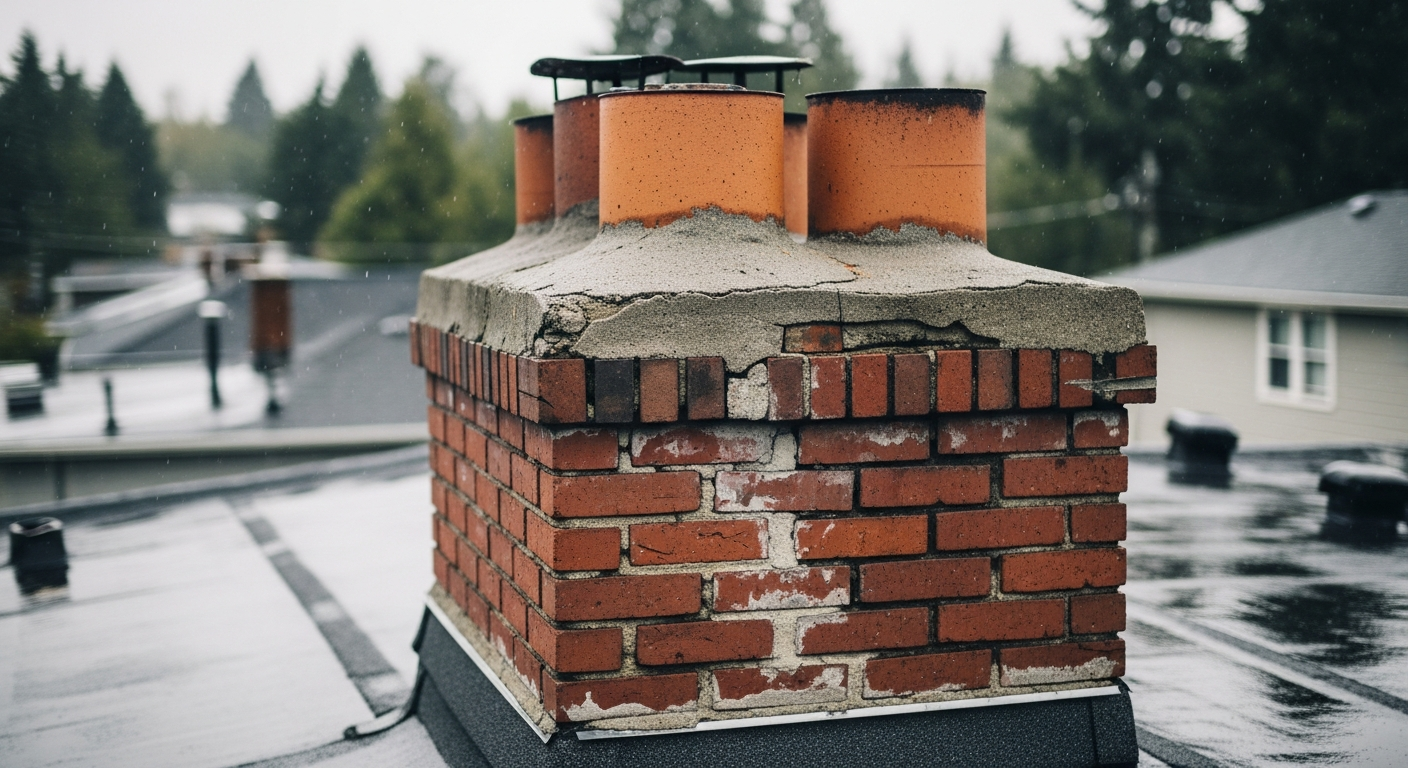
Tuckpointing and a full chimney rebuild are genuinely different procedures with different triggers — one addresses deteriorated mortar joints, the other addresses structurally compromised masonry. If two technicians quote you the same price for opposite diagnoses, that's a signal worth investigating before signing anything.
What Each Repair Actually Involves
Tuckpointing (sometimes called repointing) removes the outer layer of weathered mortar from existing joints — typically to a depth of about three-quarters of an inch — and packs fresh mortar in its place. The bricks themselves stay put. A partial rebuild, by contrast, means dismantling and relaying sections of the chimney stack where individual bricks are cracked, spalled, or have shifted out of alignment. A full rebuild takes the stack down to the roofline or even to the firebox and starts over.
The distinction matters financially. In the Seattle area, tuckpointing a standard two-story chimney typically runs $400–$900. A partial rebuild of the top two or three courses — the section most exposed to the Pacific Northwest's freeze-thaw cycles — generally falls in the $1,200–$2,500 range. A full rebuild from the roofline up can reach $4,000–$8,000 or more depending on chimney height, brick sourcing, and scaffold requirements. These are typical ranges based on regional contractor pricing; your specific quote will depend on site conditions.
| Repair Type | Typical Seattle Range | What's Replaced | Primary Trigger |
|---|---|---|---|
| Tuckpointing | $400 – $900 | Mortar joints only | Soft, cracked, or recessed mortar |
| Partial rebuild (top courses) | $1,200 – $2,500 | Bricks + mortar, limited section | Spalled or displaced bricks, top 1–4 courses |
| Full rebuild (roofline up) | $4,000 – $8,000+ | Entire above-roof structure | Widespread structural failure, severe lean |
| Full rebuild (firebox up) | $8,000 – $20,000+ | Complete chimney | Foundation-level damage, catastrophic failure |
The Structural Criteria That Drive the Decision
A legitimate diagnosis follows the masonry, not the invoice. Here's what each finding genuinely calls for.
Tuckpointing is appropriate when: mortar joints are recessed more than a quarter-inch, show hairline cracking, or crumble when probed with a key — but the brick faces are still flat, intact, and in their original positions. This is extremely common in Seattle homes built before 1980, where lime-based mortars have simply weathered over decades of wet winters.
A partial rebuild is appropriate when: individual bricks are spalled (the face has popped off), cracked through their full depth, or visibly displaced. The top two courses of a chimney crown area are the most vulnerable to Seattle's rain-and-freeze cycles and are the most common candidates for partial work.
A full rebuild is appropriate when: there is a measurable lean (more than one inch off plumb over a ten-foot run is a common benchmark), when multiple courses across the entire stack show structural movement, or when an inspection camera reveals that interior wythe bricks — the hidden inner layer — have collapsed.
If a technician recommends a full rebuild on a chimney that still stands plumb, has intact brick faces, and shows only mortar deterioration, that is worth a second opinion.
A Scenario Worth Thinking Through
Consider Edward, a homeowner in Ballard with a 1952 brick chimney. He books two inspections after noticing white staining on the upper stack. The first technician says the chimney needs a full rebuild and quotes $6,500. The second says it only needs tuckpointing and quotes — also $6,500.
This is a hypothetical teaching example, but the pricing coincidence it illustrates is real and documented by consumer protection researchers. When two diagnoses at opposite ends of the clinical spectrum produce the same number, the number may be driving the diagnosis rather than the masonry. Edward's right move: ask each technician to point to specific bricks that are cracked or displaced. If neither can, and the mortar is the only visible problem, tuckpointing is almost certainly the correct scope. You can also read more about how to spot this pattern in our guide to chimney repair red flags.
How to Evaluate a Diagnosis Yourself
You don't need to be a mason to ask the right questions during an inspection.
- Ask the technician to show you, in person, every brick they say needs replacement. A professional should be able to point to specific damaged units.
- Run a key or screwdriver along the mortar joints yourself. Soft, powdery mortar that comes away easily confirms repointing need. Solid mortar that resists scratching does not.
- Check for lean with a long level or a plumb bob against the stack. A slight lean at the crown is common and doesn't automatically mean structural failure.
- Ask whether the flashing and crown are included. Sometimes a "rebuild" quote is really a tuckpoint plus crown repair — legitimate work, but different from what's being sold.
If a recommendation still doesn't match what you're observing, the ranking on this site scores local companies on technician quality and public complaint history, which can help you shortlist firms known for honest scoping.
Why Seattle's Climate Creates Genuine Gray Areas
The Pacific Northwest's wet winters followed by occasional hard freezes create conditions where mortar deteriorates faster than in drier climates — but where full structural failure is less common than in regions with harder freeze-thaw cycling. That means the most common legitimate repair in Seattle really is tuckpointing, not rebuilding. When a full rebuild is genuinely needed, there are usually visible signs: bricks rocking when pressed, a noticeable lean visible from the street, or daylight visible through the stack on an interior camera. Seattle homeowners would also benefit from reviewing how often to sweep and inspect their chimney in the Pacific Northwest, since catching mortar wear early is precisely what prevents tuckpointing from escalating into a rebuild.
Understanding these criteria doesn't make you an expert — it makes you a buyer who can ask the right questions and recognize when an answer doesn't fit the evidence.
Frequently asked questions
- Can a chimney in Seattle really just need tuckpointing, or do most older chimneys need a full rebuild?
- Most older Seattle chimneys with mortar deterioration — a common result of the region's wet winters — need tuckpointing, not a full rebuild. A rebuild is warranted only when the bricks themselves are cracked, spalled, or structurally displaced, or when the stack has a measurable lean. Mortar failure alone does not justify a rebuild.
- What does tuckpointing cost in Seattle compared to a chimney rebuild?
- Tuckpointing a standard chimney in the Seattle area typically ranges from $400 to $900. A partial rebuild of the top few courses runs roughly $1,200 to $2,500. A full rebuild from the roofline up generally costs $4,000 to $8,000 or more. These are typical regional ranges — your actual quote will depend on chimney height, access, and brick availability.
- How do I know if a chimney technician's rebuild recommendation is legitimate?
- Ask the technician to show you, on-site, each brick they say needs replacement. A legitimate rebuild diagnosis involves visibly cracked, spalled, or displaced bricks, or a chimney that is measurably out of plumb. If the technician cannot point to specific structural damage and the mortar is the only visible problem, get a second opinion before authorizing any work.