
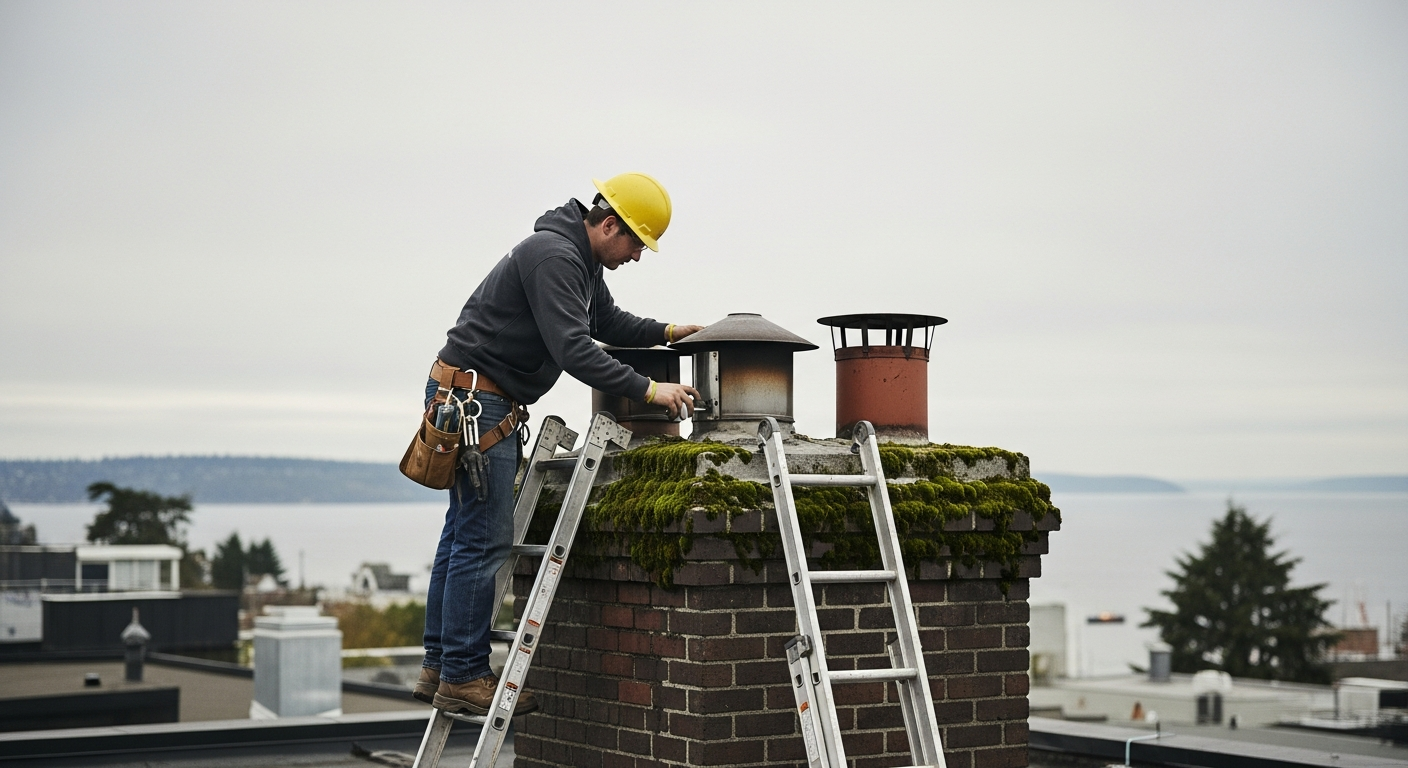
Most Seattle homes that have used their fireplace regularly and made no fuel or appliance changes need only a Level 1 chimney inspection — the least invasive and least expensive tier. Level 2 is required by NFPA 211 when a home is sold, after a chimney event such as a chimney fire, or when a fuel-burning appliance is changed. Level 3 is reserved for situations where serious hidden damage is suspected and cannot be evaluated any other way. If a technician recommends a higher level without explaining a specific documented trigger, ask them to put that reason in writing before you agree.
What the NFPA 211 Tiers Actually Mean
NFPA 211 — the national standard that governs chimney inspection in Washington State and across the country — defines three inspection levels with clear, distinct purposes. Understanding them costs you nothing and can save you hundreds of dollars at the door.
Level 1 covers readily accessible portions of the chimney: the firebox, the damper, the accessible flue interior, and the exterior above the roofline where a technician can see it from a ladder. It is appropriate for a chimney that has been used as intended, with the same appliance and fuel type, and shows no signs of damage.
Level 2 adds a video scan of the entire flue length and an inspection of the attic, crawl space, and basement where the chimney passes through. Per NFPA 211, it is triggered by: a real-estate transaction, a change in the fuel type or appliance connected to the flue, an event that may have caused damage (chimney fire, earthquake, or severe weather), or if a Level 1 reveals something that cannot be fully assessed visually.
Level 3 involves destructive investigation — removing components such as chimney crowns, interior walls, or masonry — to access areas that cannot be seen any other way. It is uncommon, expensive, and only justified when Levels 1 and 2 provide evidence of serious concealed damage.
A Scenario Worth Knowing
Consider Edward, a Ballard homeowner who has burned the same wood-insert stove for four years without incident. A technician arrives for a routine sweep and, before inspecting anything, quotes Edward a Level 2 inspection plus a flue camera scan — adding $180 to the visit. Edward asks what specific NFPA 211 trigger applies to his situation. The technician cannot name one. Edward declines the upgrade, pays for the Level 1, and the chimney passes. This is a hypothetical teaching example, but the dynamic it illustrates is documented in the chimney upsell tactics guide.
Typical Seattle Inspection Cost Ranges
The figures below are typical ranges observed in the Seattle–Puget Sound market; individual quotes will vary by company, access difficulty, and chimney height.
| Inspection Level | Typical Seattle Range | What Is Included |
|---|---|---|
| Level 1 | $100 – $200 | Visual scan of accessible areas; standard with a sweep |
| Level 2 (video scan) | $250 – $450 | Full flue camera + all accessible structural spaces |
| Level 3 (destructive) | $500 – $1,500+ | Removal of components to access concealed areas |
If a company's Level 1 quote is already at the top of that range and they are pushing you toward Level 2, it is worth comparing against the ranking, which scores companies partly on price transparency.
The Four Legitimate Triggers for a Level 2
Before agreeing to a Level 2, ask the technician which of these four NFPA 211 conditions applies:
- You are buying or selling the home
- You changed the appliance or switched fuel types (for example, converting from wood to gas)
- A damaging event occurred — chimney fire, significant earthquake, or a windstorm that moved the chimney structure
- A Level 1 revealed an anomaly that requires a camera to evaluate
None of those apply to a standard annual maintenance visit on an unchanged system. If your flue lining concerns you separately, Signs Your Chimney Needs Relining outlines specific symptoms — spalling tile, rusted damper, or visible gaps — that would legitimately support a deeper look.
How to Push Back Without Being Confrontational
You do not need to accuse a technician of anything. A calm, factual question does the work: *"Can you note on the invoice which NFPA 211 condition makes a Level 2 required for my situation today?"* A well-trained technician will answer clearly. A technician who cannot or deflects is giving you important information about how the rest of the visit will go.
If you are heading into the late-fall heating season — the period when Seattle chimney companies are at peak demand and scheduling windows shrink — lock in your Level 1 sweep early. A rushed visit under pressure is when upsells are easiest to slip past a distracted homeowner.
Frequently asked questions
- Does a Seattle home sale legally require a Level 2 chimney inspection?
- NFPA 211 specifies that a real-estate transaction is a standard trigger for a Level 2 inspection, and most buyers' agents and home inspectors follow this guidance. It is not a Washington State statute, but buyers routinely request it as a condition of sale, and lenders on some loan types may require it.
- Can a company legally charge for a Level 2 inspection without a documented reason?
- Yes — inspection tiers are not state-regulated price categories in Washington; they are industry standards set by NFPA 211. A company can quote any price for any scope of work. Your protection is asking for the specific NFPA 211 trigger in writing before you agree, and comparing quotes from multiple licensed companies.
- How often do Seattle homes actually need a Level 2 chimney inspection?
- For a homeowner who has not changed appliances, fuels, or experienced a damaging event, a Level 2 is typically needed only at the point of sale or after a specific incident. Annual maintenance inspections for unchanged systems generally fall within the Level 1 scope under NFPA 211 guidelines.