
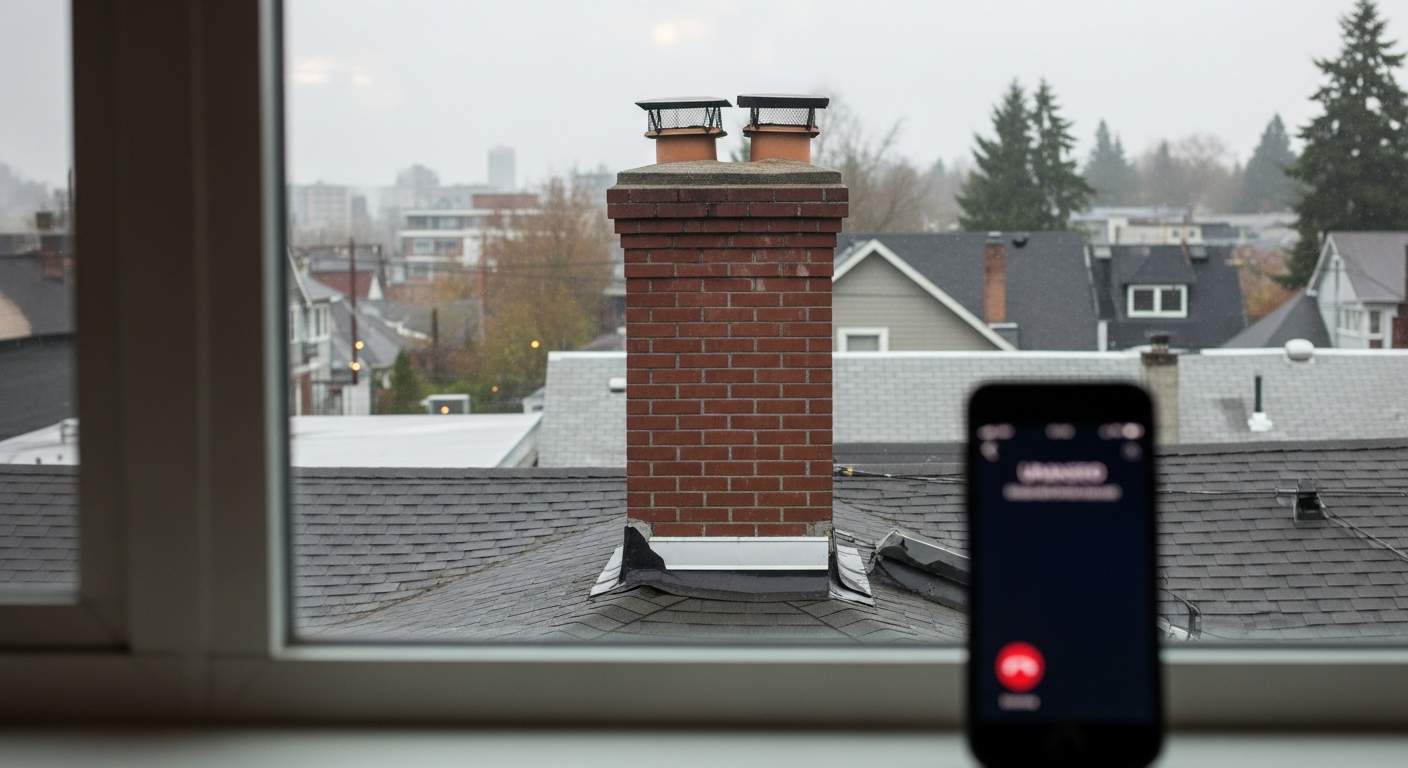
If a Seattle chimney company hasn't returned your call or web form within two business days, that silence is data — not a scheduling fluke. Responsiveness before money changes hands is one of the most reliable predictors of how a contractor will behave when a job goes wrong. Use a timed, multi-channel follow-up protocol to confirm whether a company is worth pursuing, then move on quickly if it isn't.
Why Ghosting at the Quote Stage Actually Matters
Contractors who struggle to answer a prospective customer's inquiry are, almost by definition, operating without a reliable communication system. That same missing system is what breaks down when you need a callback after a liner installation question, a warranty issue, or a job that wasn't finished correctly.
The pattern is well-recognized in consumer-protection research: pre-sale responsiveness and post-sale accountability tend to travel together. A company that answers promptly before it has your money is demonstrating organizational capacity — dispatchers, schedulers, and a culture where the phone matters. A company that lets you chase them for a quote is showing you the floor, not the ceiling, of what to expect.
This is why response time is one of the eight public measures used in the ranking on this site. It isn't scored as a nicety; it's scored as a proxy for reliability.
The Seattle-Specific Context
Puget Sound's wet winters concentrate chimney-service demand into a narrow seasonal window — typically September through November and again in February after cold snaps. During those peaks, every legitimate chimney company in the metro area is busy. But "busy" and "unresponsive" are not the same thing. A well-run operation with a full schedule will still acknowledge your inquiry and give you an honest wait time. An under-staffed or over-committed operation simply won't pick up.
If you submitted a form during peak season and heard nothing, that's worth noting — but it still doesn't excuse a two-week silence.
An Illustrative Scenario
*The following is a hypothetical teaching example, not a real customer experience.*
Edward, a Ballard homeowner, notices white staining on his chimney's exterior in late September and submits an online contact form to three chimney companies he found through a quick search. One responds within four hours with a scheduling link. One calls back the next morning. The third sends an automated confirmation email — and then nothing for eleven days.
Edward books with Company One, which arrives on time, diagnoses efflorescence from a cracked crown, and emails a written estimate the same evening. When he later has a question about the mortar color match, they reply within a day.
The third company finally emails a generic quote nine days after Edward has already had the work done. Nothing about that delay was accidental — it reflected how that business actually runs.
How Long Is Too Long? A Realistic Benchmark
The table below reflects typical response-time expectations for Seattle-area service contractors. Use it as a personal threshold before you escalate or move on.
| Contact Channel | Reasonable Response Window | Concerning If Longer Than |
|---|---|---|
| Web contact form | 1 business day | 2 business days |
| Direct phone call (left voicemail) | Same or next business day | 2 business days |
| Email to a named address | 1–2 business days | 3 business days |
| Text message (if offered) | 4–8 hours | 1 business day |
| Online booking request | Immediate auto-confirm + 1 day for human follow-up | 2 business days without human contact |
Typical ranges are based on general service-industry norms and Seattle contractor patterns; individual schedules vary by season.
A Systematic Follow-Up Protocol
Before you write a company off entirely, give them one structured second chance. Ghosting can occasionally be a spam filter or a missed message — though that itself suggests a company not monitoring its own inbox carefully.
Step 1 — Switch channels. If you submitted a form, call the main number. If you called, try email. Each channel is a separate test.
Step 2 — Note the date and time of every attempt. A written log protects you and focuses your decision-making. If you eventually file a BBB complaint or a dispute, this record matters.
Step 3 — Send a direct, time-stamped message. Something plain works well: *"I submitted a request on [date] and haven't heard back. I'm hoping to schedule an inspection before [specific date]. Please let me know if you're available."* This removes ambiguity and gives them a clear deadline.
Step 4 — Set a hard decision date. If you've had no substantive human response within three business days of your follow-up, move on. You have learned something real about this company.
Step 5 — Reallocate your time to vetted alternatives. Return to the ranking and contact the next company on the list. You are not being demanding — you are protecting weeks of your time.
What Responsiveness Can't Tell You Alone
A fast response is necessary but not sufficient. A company can reply in twenty minutes and still send an unlicensed technician or push unneeded work. Pair responsiveness with verification: confirm a current Washington contractor license, check for general liability and workers' comp insurance, and read recent Google reviews for patterns — not just the star average.
If a company calls back quickly and you're moving toward booking, also read through Chimney Repair Red Flags: How to Avoid Getting Ripped Off in Seattle before you sign anything. And if you're still deciding whether you even need service, Signs Your Chimney Needs Relining: A Seattle Homeowner's Guide can help you walk into the quote conversation knowing what you're actually looking for.
Responsiveness earns a company the right to be evaluated further. It doesn't earn your trust by itself — but silence before the job almost always earns a pass.
Frequently asked questions
- How long should I wait for a Seattle chimney company to return my call before moving on?
- For a voicemail or web form, two business days is a reasonable outer limit outside of peak season. If you've followed up through a second channel and still have no substantive human response after three business days from that follow-up, move on and contact another company.
- Does a slow response just mean the company is busy, or is it a real red flag?
- A genuinely busy company will typically acknowledge your inquiry and give you an honest wait time. Silence is different from a full schedule — it usually indicates a business without reliable communication systems, which is the same system you'd need to reach them if a completed job had a problem.
- What should I do if a chimney company finally calls back after weeks of silence?
- You can still get a quote, but treat the delay as evidence and factor it into your decision. Ask directly how they handle callbacks and warranty questions after a job is completed. If their explanation doesn't satisfy you, it's reasonable to choose a more responsive company instead.