
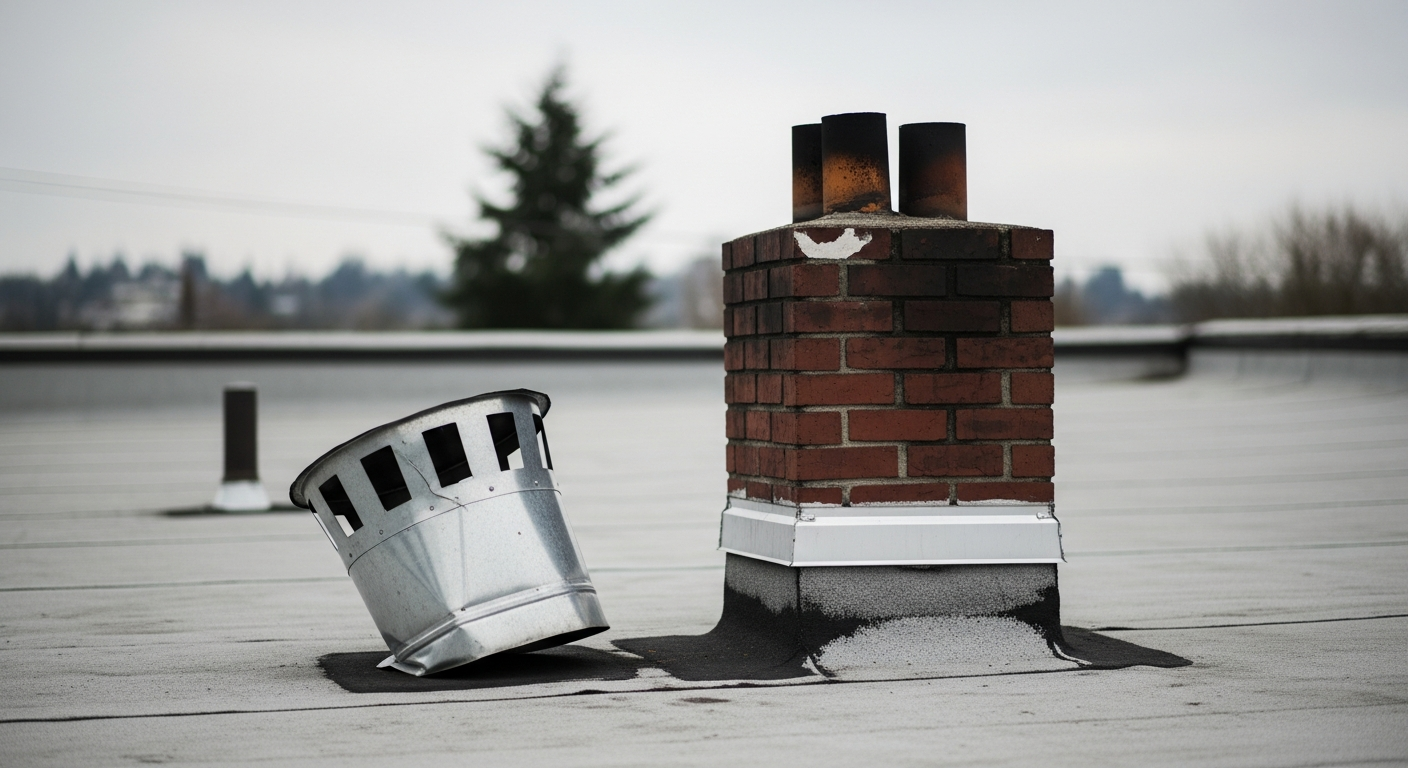
If a chimney technician leaves your Seattle home without replacing the cap, clearing debris, or closing the damper, you have an immediate weather and pest exposure problem — and real legal options. A same-day walkthrough checklist before the truck pulls away is your first and strongest line of defense. When work is already incomplete, Washington State's contractor-licensing and consumer-protection laws give you a documented path to resolution.
What "Job Complete" Actually Looks Like
A finished chimney service — whether a sweep, inspection, or repair — has a short list of non-negotiable closing steps. Knowing them is the difference between catching a problem before the tech drives off and discovering it a week later during a wind-driven November rain.
After a standard sweep or Level I inspection, every one of these should be true before you sign anything:
- The chimney cap is seated and secured on the crown.
- The damper is fully closed (or left in the position it was found, if the technician has documented a defect).
- All drop cloths and protective covers are removed from the firebox and hearth.
- Soot and debris are bagged and removed from the premises, or at minimum consolidated and disclosed.
- A written service summary — findings, work performed, any deferred items — is handed to you or emailed before departure.
- If a liner, flashing, or masonry repair was scoped, the repaired area is visually accessible for your review before payment.
This list sounds obvious. In practice, rushed technicians skip closing steps, particularly the cap and the damper, more often than most homeowners expect.
An Illustrative Scenario
Consider this hypothetical: Edward, a homeowner in Ballard, books a sweep and cap replacement through a company he found via a Google ad. The technician arrives, spends about 40 minutes on the roof, collects payment at the door, and leaves. That evening, Edward notices the firebox smells strongly of rain. He goes onto the roof the next morning and finds the new cap sitting beside the flue, not installed. Two starlings are already investigating the opening.
Edward's situation is common enough to have a name in contractor-dispute circles: "payment before completion." Had he done a five-minute walkthrough *before* handing over his card, he would have caught it while the technician was still on-site. This scenario is hypothetical — but the pattern it illustrates is real and documented in Washington State contractor-complaint records.
*(Worth noting: companies that show up primarily through paid ads rather than earned reputation carry a higher variance in service quality. See Top of Google Isn't the Best Chimney Company — It's Who Paid for more on that dynamic.)*
Same-Day Walkthrough Checklist
Do this before you sign the invoice or hand over payment.
| Step | What to Check | Red Flag |
|---|---|---|
| Roof/cap | Cap seated flush, secured, no gaps around flue collar | Cap lying nearby; old cap still in place when replacement was scoped |
| Firebox & damper | Damper fully closed; no daylight visible from inside | Visible sky through flue; cold draft present |
| Hearth area | Drop cloths removed; no soot residue on carpet or floor | Dusty footprints; ash scattered on hearth |
| Debris removal | Soot bagged; no loose debris in firebox | Open bag of soot left inside; debris on roof near flashing |
| Written summary | Paper or digital service report in your hands | Technician offers only a verbal recap |
| Deferred items | Any unfinished work is listed in writing with a scheduled return date | Vague promise to "come back and sort it" |
If anything in that table is flagged, ask the technician to correct it before leaving. Most will. If they refuse or become evasive, do not finalize payment.
Typical Seattle Chimney Service Costs — Know What You Paid For
Understanding price bands helps you assess whether a rushed job reflects a low-ball quote or genuine negligence.
| Service Type | Typical Seattle Range | What Completion Should Include |
|---|---|---|
| Sweep only (Level I inspection) | $150 – $280 | Debris removal, written findings, damper check |
| Sweep + Level II inspection | $275 – $450 | Above, plus video or detailed structural assessment |
| Cap replacement (standard single-flue) | $180 – $380 installed | New cap seated, old cap removed and taken away |
| Flashing repair | $300 – $700 | Sealed visible seams, no open gaps, photos provided |
| Full relining (stainless liner) | $2,000 – $5,500 | Liner seated, termination cap installed, sweep-out |
These are typical ranges for the Seattle/Puget Sound area and will vary by access difficulty, chimney height, and company. They are not guarantees.
Your Washington State Recourse When Work Is Left Undone
Washington gives consumers more leverage than most homeowners realize.
Immediate steps (same day or next morning): 1. Photograph everything — open flue, missing cap, debris, the roof — with timestamps. 2. Send a written message (text or email) to the company describing the incomplete items and requesting a return visit within 48 hours. Written records matter if this escalates. 3. If you paid by credit card, do not dispute yet — give the company one documented opportunity to return.
If the company does not respond within 48–72 hours: - File a complaint with the Washington State Department of Labor & Industries (L&I). Licensed contractors are required to complete contracted work; L&I can investigate and sanction license holders. - File a separate complaint with the Washington State Attorney General's Consumer Protection Division under the Consumer Protection Act (RCW 19.86), which covers unfair or deceptive acts in trade. - Contact your credit card issuer to dispute the charge as "services not rendered as described." - File a report with the Better Business Bureau — not because the BBB has enforcement power, but because it creates a public record.
Before any of this, confirm the company holds a valid Washington contractor's license. You can verify at L&I's online lookup tool in about two minutes. An unlicensed operator has fewer protections but also fewer formal obligations, which changes your approach toward small-claims court more quickly.
For a broader look at warning signs that a company may not perform as promised, Chimney Repair Red Flags: How to Avoid Getting Ripped Off in Seattle covers pre-hire vetting in detail.
How to Choose Better Next Time
The most reliable safeguard against incomplete work is choosing a company whose accountability is visible before the appointment. The ranking on this site scores Seattle-area chimney companies on eight public measures — including technician quality indicators, public complaint history, and license status — so you can compare before you book, not after you're left with an open flue in October.
Frequently asked questions
- Can I withhold payment if the chimney technician left without finishing the job in Washington State?
- Yes. In Washington, you are entitled to withhold payment for work that was not completed as described in the service agreement. Document the incomplete items in writing, photograph the defects, and notify the company immediately. If you already paid by credit card, you can dispute the charge as services not rendered as described after giving the company a documented opportunity to return.
- Who do I report an incomplete or negligent chimney job to in Seattle?
- File a complaint with Washington State's Department of Labor & Industries (L&I) if the contractor is licensed — L&I can investigate and sanction the license holder. You can also file with the Washington Attorney General's Consumer Protection Division under RCW 19.86. For smaller amounts, King County District Court small-claims division is an option for disputes under $10,000.
- What is the most common thing chimney technicians leave undone after a Seattle service call?
- Based on consumer-complaint patterns, the two most commonly skipped closing steps are failing to reseat or replace the chimney cap and leaving the damper open. Both create immediate weather exposure and pest entry risk, which is especially consequential in the wet Seattle climate. Always verify cap placement and damper position before the technician leaves.