
If a chimney contractor in Seattle has taken your money and vanished, caused new damage, or left work half-done, Washington State gives you at least three formal levers to pull: a Labor & Industries contractor complaint, an Attorney General consumer-protection filing, and small claims court. Most homeowners don't know these options exist, let alone which one fits their situation — this guide walks through each one clearly.
When Things Go Wrong: One Homeowner's Experience
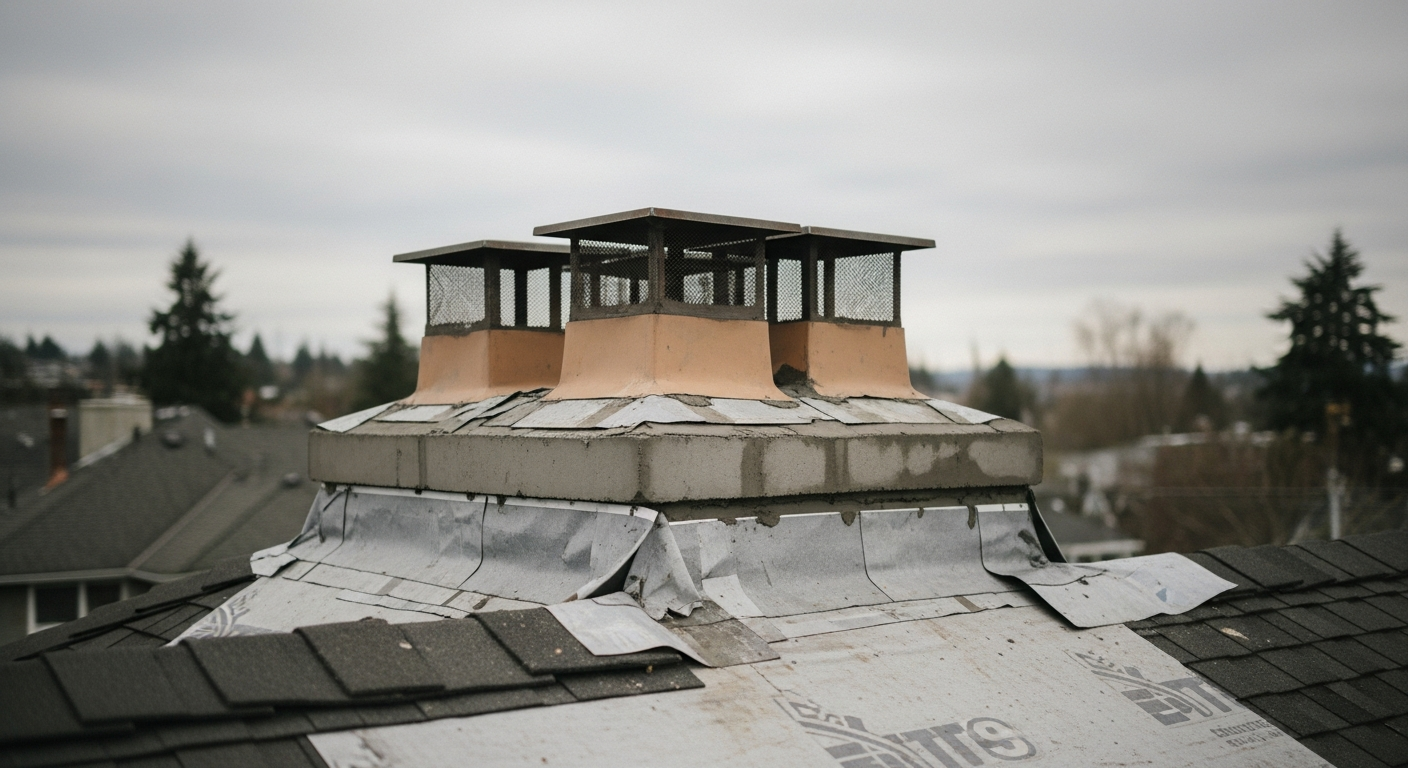
Consider this hypothetical, but entirely plausible, scenario. Edward, a homeowner in Ballard, hired a chimney company after finding them through a sponsored Google ad — a reminder that ad placement reflects a marketing budget, not quality (see Top of Google Isn't the Best Chimney Company — It's Who Paid). The crew relaid the crown mortar, collected $1,400, and promised to return to seal the flashing. They never came back. Calls went unanswered. Edward is now staring at a gap in the flashing, a rainstorm forecast, and no idea what to do next.
Edward's situation is exactly what Washington's consumer-protection framework is designed for. The key is knowing which tool to reach for first.
Step One: Verify the Contractor's License Status
Before filing anything, look up the company on the Washington State Department of Labor & Industries (L&I) Contractor Verify tool at lni.wa.gov. Licensed contractors in Washington are required to carry a $6,000 to $60,000 surety bond (the amount scales with company size) and general liability insurance. If they were unlicensed, that fact alone strengthens every complaint you file.
A company working without a license in Washington violates RCW 18.27 — the Contractor Registration Act. Note the registration number, bond company name, and bond number from the L&I lookup. You will need all three.
Step Two: File a Washington L&I Contractor Complaint
L&I is the fastest route when the contractor is licensed and bonded. You file a complaint online; L&I investigates and, if the violation is substantiated, can pursue the contractor's surety bond on your behalf. The bond is specifically intended to compensate harmed consumers for incomplete or defective work.
What it covers: unfinished work, faulty workmanship, failure to honor a written contract.
What it does not cover: disputes that are purely a matter of opinion about quality, or losses that exceed the bond amount.
Realistic timeline: L&I typically acknowledges a complaint within two to three weeks and may take several months to resolve it. File early — there is a two-year statute of limitations on bond claims under RCW 18.27.040.
Step Three: File with the Washington Attorney General
The AG's Consumer Protection Division handles complaints under the Washington Consumer Protection Act (CPA), RCW 19.86. This route is most useful when the contractor made false claims during the sale — for example, inventing defects to upsell repairs you didn't need (a tactic detailed in Chimney Repair Red Flags: How to Avoid Getting Ripped Off in Seattle).
The AG does not represent individual consumers in civil court, but your complaint: - Creates a formal record the AG uses to identify patterns and build enforcement actions. - Can be cited if you later file a private lawsuit under the CPA, which allows recovery of up to three times actual damages plus attorney fees. - Costs nothing and takes roughly 20 minutes at atg.wa.gov/file-complaint.
Step Four: Small Claims Court in King County
If you want money back and the amount is $10,000 or less, King County District Court small claims is often the most direct path. Washington raised the small claims limit to $10,000 in 2023. You do not need a lawyer; most chimney disputes fall well within that ceiling.
| Remedy | Best For | Cost to File | Likely Timeline | Max Recovery |
|---|---|---|---|---|
| L&I Contractor Complaint | Unfinished work, bond claim | Free | 2–6 months | Bond amount (typically $6K–$60K) |
| AG Consumer Protection | Deceptive sales tactics | Free | Varies; no direct payout | Supports private CPA suit |
| Small Claims Court (King Co.) | Direct cash recovery ≤$10K | ~$45–$80 filing fee | 30–70 days to hearing | Up to $10,000 |
| Private CPA Lawsuit | Willful deception, larger losses | Attorney fees apply | 6–18 months | 3× damages + attorney fees |
*Costs and timelines are typical ranges based on publicly available Washington court and agency data; individual cases vary.*
Building Your Paper Trail
Every remedy above runs on documentation. Gather these before you file anything:
- The original written contract (or any texts and emails if no formal contract exists — a lack of written contract is itself a violation under Washington's Home Improvement Contractor rules for jobs over $500).
- All payment records: checks, credit card statements, Venmo screenshots.
- Timestamped photos of the incomplete or damaged work.
- A written repair estimate from a second licensed contractor describing what is wrong and what it will cost to fix — this is your damages figure.
If you paid by credit card, also file a chargeback with your card issuer simultaneously. A chargeback does not prevent you from pursuing L&I or small claims, and issuers often resolve it faster than any government process.
How to Choose a Contractor Who Won't Put You in This Position
The most effective dispute is the one you never have to file. Before hiring anyone, check the ranking, which scores Seattle-area chimney companies on eight public measures including license and insurance verification, public complaints, and BBB history. Prioritize companies that provide a written scope of work, a Washington registration number you can verify in real time, and proof of liability insurance before any deposit changes hands.
When evaluating the scope of work, it helps to understand what legitimate repair looks like — for example, whether your flue needs relining rather than a surface patch (see Signs Your Chimney Needs Relining: A Seattle Homeowner's Guide). A contractor who cannot explain the difference between the two, in plain language, is a contractor worth reconsidering.
Washington's remedies are real, but they take weeks or months. A few hours of due diligence before you sign anything remains the better investment.
Frequently asked questions
- How do I file a complaint against an unlicensed chimney contractor in Washington State?
- File directly with Washington Labor & Industries at lni.wa.gov. Working without a contractor's registration violates RCW 18.27 and L&I can issue fines against the individual. Separately, report to the AG's Consumer Protection Division, and if your losses are $10,000 or under, file in King County small claims court — an unlicensed contractor has no valid defense for the work performed.
- What is the statute of limitations for a chimney contractor dispute in Washington?
- For a bond claim through L&I, you generally have two years from the date of the violation under RCW 18.27.040. For a small claims court action based on breach of contract, Washington allows six years for written contracts and three years for oral ones. File as soon as the dispute is clear — documentation degrades and contractors can dissolve their businesses.
- Can I get triple damages from a bad chimney contractor in Washington?
- Possibly. Washington's Consumer Protection Act (RCW 19.86) allows a private lawsuit seeking up to three times actual damages plus attorney fees if you can show the contractor engaged in an unfair or deceptive act in trade or commerce — for example, fabricating defects to sell unnecessary repairs. This route requires an attorney and is most practical when actual damages exceed a few thousand dollars.