
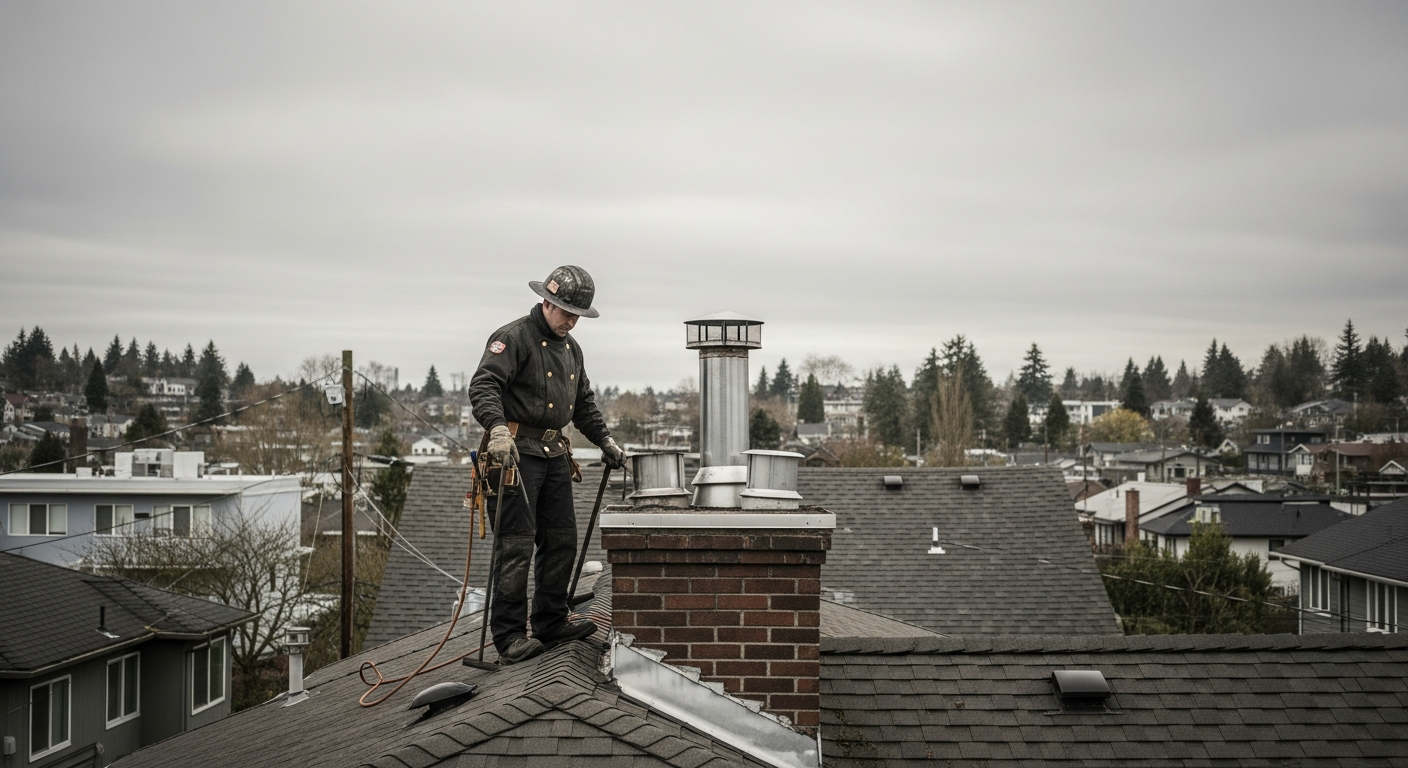
Three components — cap, crown, and flashing — protect nearly every Seattle chimney from rain, debris, and animals. When one fails, water finds its way in fast. When all three are sound, a masonry chimney can go decades without major work. The trouble is that "all three need replacing" has become one of the most common upsells in the chimney industry, so knowing what each part actually does — and what genuine failure looks like — is worth your time before you approve any quote.
What Each Component Does
The Chimney Cap A chimney cap sits at the very top of the flue opening. Its job is straightforward: keep rain, birds, squirrels, and windblown debris out of the flue. Caps are almost always galvanized steel, stainless steel, or copper. A functioning cap has solid mesh sides, an intact lid, and mortar or screws holding it to the flue tile. Seattle's wet winters accelerate rust on galvanized caps; stainless steel versions typically last 20–plus years even in Puget Sound conditions.
Signs of genuine cap failure: visible rust-through on the lid, mesh sides collapsed inward, the cap itself missing entirely, or animal nesting material visible inside the flue when you shine a flashlight up from the firebox.
What is NOT a reason to replace a cap: surface rust on galvanized steel that has not yet perforated the metal, minor discoloration, or a technician simply saying it "looks old."
The Chimney Crown The crown is the sloped concrete or mortar slab that covers the top of the chimney's masonry, leaving only the flue liner exposed at the center. It acts as the chimney's roof — directing water away from the brick below. A properly built crown overhangs the brick slightly and slopes downward toward the edges.
Signs of genuine crown failure: cracks wider than roughly 1/8 inch, pieces that have spalled away, or evidence of water staining on interior walls directly below the chimney. Hairline surface cracks less than 1/16 inch wide are common in older Seattle homes and can often be sealed with a brush-applied crown coat product rather than full replacement.
What is NOT automatically a reason for full replacement: hairline cracking without open gaps, minor efflorescence (white salt deposits), or age alone.
Flashing Flashing is the metal seal — usually aluminum or lead-coated copper — that bridges the joint between the chimney's masonry and the roof surface. It has two layers: step flashing woven into the shingles, and counter flashing embedded into the mortar joints above it. When both layers are intact and properly sealed, flashing is one of the most reliable components on the chimney. When it fails, it produces the classic symptom: water stains on the ceiling or walls of the room directly below the chimney.
Signs of genuine flashing failure: visible gaps between counter flashing and masonry, caulk that has fully separated and pulled away, rust-through, or interior water staining that correlates with rainfall rather than condensation.
What is NOT a reason to replace flashing: caulk that is slightly dry but still adhering, cosmetic surface rust without penetration, or a technician's general concern without showing you photographic evidence.
A Teaching Scenario
Consider Edward, a hypothetical Ballard homeowner. A door-to-door technician spots his chimney from the street and tells him the cap, crown, and flashing all need replacing — quoting $1,800 combined. Edward takes photos with his phone and later has a second company inspect during a scheduled Level 1 inspection. The inspector finds the cap has surface rust but no perforation, the crown has a 1/16-inch hairline crack that qualifies for a sealant application, and the flashing is sound with no interior water staining. Total recommended work: a stainless steel cap swap and crown sealant application. This scenario is hypothetical, but it reflects the pattern the ranking methodology is specifically designed to surface — companies with a history of transparent, itemized quotes versus those with vague bundled pricing.
Typical Seattle Repair Cost Ranges
The table below reflects typical market ranges in the Seattle / Puget Sound area. Actual quotes vary by access difficulty, chimney height, and material choice.
| Component | Repair / Sealant | Full Replacement | DIY Feasibility |
|---|---|---|---|
| Chimney cap (standard single-flue) | N/A — replace directly | $75–$350 installed | Moderate — requires roof access |
| Crown coat / sealant (hairline cracks) | $150–$350 | N/A | Low — product application is specific |
| Crown rebuild (failed or missing) | N/A | $400–$900 | Not recommended |
| Flashing re-seal (caulk/sealant only) | $100–$250 | N/A | Low |
| Flashing full replacement | N/A | $500–$1,500 | Not recommended |
These are typical ranges, not guarantees. Get at least two itemized written quotes before approving work above $300.
How to Protect Yourself Before You Approve Anything
Ask the technician to show you photos taken from the roof — not stock images, not vague verbal descriptions. A reputable company will document what they found as a matter of routine. If a tech quotes cap, crown, and flashing replacement in a single bundled price without separate line items, that is worth questioning; see Chimney Repair Red Flags: How to Avoid Getting Ripped Off in Seattle for a fuller breakdown of bundled-quote tactics.
If you are not sure whether you need a full inspection first, What a Chimney Inspection Should Cost in Seattle (2024 Guide) covers what a Level 1 and Level 2 inspection should include and what they typically cost — useful context before you invite anyone onto your roof.
Finally, before hiring any company, bring a short list of direct questions about licensing, insurance, and scope documentation. The guide Questions to Ask Before Hiring a Chimney Company in Seattle covers exactly that ground.
Frequently asked questions
- How do I tell whether my chimney needs a new cap or just a new crown?
- They are separate components. The cap covers the flue opening at the very top and is replaced when the lid or mesh is rusted through or missing. The crown is the concrete slab around the cap; it needs repair or replacement when cracks are wider than roughly 1/8 inch or pieces have broken away. A licensed inspector can distinguish the two during a Level 1 inspection and should provide photos.
- What does failed chimney flashing actually look like from inside the house?
- The most reliable sign is water staining on the ceiling or walls of the room directly below the chimney, appearing or worsening after rainfall — not during cold weather without rain, which points more toward condensation. From the roof, look for visible gaps between the counter flashing and the mortar joint, or caulk that has fully separated and pulled away from the masonry.
- Is it ever safe to skip repairing a cracked chimney crown in Seattle's climate?
- Small hairline cracks (under 1/16 inch) are common and can often be stabilized with a brush-applied crown sealant rather than a full rebuild. However, Seattle's freeze-thaw cycles — even mild ones — allow water to enter open cracks and widen them over successive winters. Cracks wider than 1/8 inch should not be left unaddressed, as water penetration into the masonry below accelerates significantly.